 Save
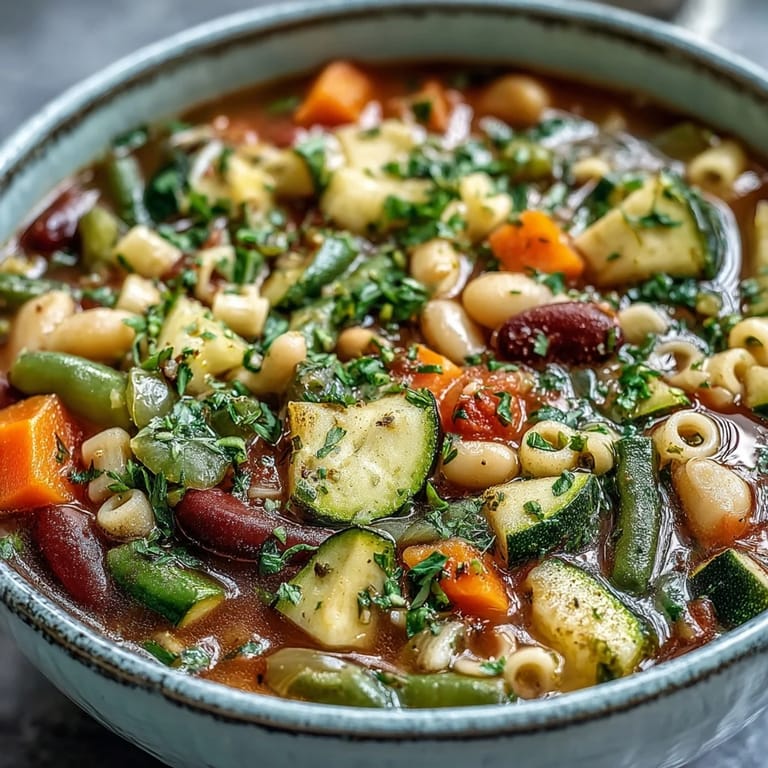
Save There's something about chopping vegetables on a lazy Sunday afternoon that makes you want to cook something that simmers for hours, even if it only takes forty minutes. My neighbor Maria handed me a handwritten minestrone recipe years ago, scribbled on the back of a grocery list, and I've been tinkering with it ever since. This soup arrived in my kitchen as a practical solution to a nearly empty vegetable drawer, but it stayed because of how it transforms humble ingredients into something that tastes like it's been loved for generations. Every bowl feels like a small act of kindness to yourself, loaded with beans, pasta, and enough greens to make you feel virtuous without any sacrifice of flavor.
I made this for my book club on a rainy Wednesday, doubling the recipe because I always underestimate how much soup people will eat when it's warm and comforting. One of my friends, who usually picks at food, went back for seconds and asked for the recipe before even finishing her first bowl. That's when I knew this wasn't just soup, it was the kind of dish that quietly wins people over.
Ingredients
- Olive oil: Two tablespoons is your flavor foundation, so use something decent that makes you happy to smell it.
- Yellow onion, carrots, and celery: This holy trinity is the aromatic backbone, and dicing them roughly equal helps them cook at the same pace.
- Garlic: Mince it fine so it dissolves into the broth rather than sitting as little chunks.
- Zucchini and potato: The potato adds subtle body while the zucchini keeps things fresh and slightly delicate.
- Green beans: Chop them into bite-sized pieces so you're not wrestling with long strands while eating.
- Diced tomatoes: Canned is perfectly fine here and honestly more reliable than fresh for consistent flavor.
- Cannellini beans: Rinse them thoroughly to remove the starchy liquid that can make the broth cloudy.
- Small pasta: Ditalini and elbow macaroni work beautifully, though I've used tiny shells when that's what I had.
- Vegetable broth: Quality matters more than you'd think, so taste yours before you buy and pick one you'd actually drink.
- Dried Italian herbs and bay leaf: These create the authentic Italian whisper that makes people ask what you did differently.
- Spinach or kale: Add it at the very end so it stays bright and tender, not dark and defeated.
- Fresh parsley: This final flourish adds freshness that feels both intentional and generous.
Tired of Takeout? 🥡
Get 10 meals you can make faster than delivery arrives. Seriously.
One email. No spam. Unsubscribe anytime.
Instructions
- Build your aromatic foundation:
- Heat the olive oil in a large pot over medium heat and add the onion, carrots, and celery. You'll know they're ready when the onion turns translucent and the kitchen smells like a warm Italian kitchen, about 5 minutes.
- Layer in the rest of the vegetables:
- Stir in the garlic, zucchini, potato, and green beans, cooking for another 3 minutes until everything becomes fragrant and slightly softened at the edges.
- Create the broth base:
- Add the diced tomatoes, cannellini beans, vegetable broth, dried herbs, and bay leaf, then bring everything to a boil. The transformation from scattered ingredients to cohesive soup happens faster than you'd expect.
- Let it simmer and meld:
- Reduce the heat, cover, and simmer for 20 minutes, which gives the vegetables time to soften and the flavors to get to know each other. This is a good moment to wipe down your counter and feel ahead of things.
- Add the pasta:
- Stir in the pasta and simmer uncovered for 8 to 10 minutes, stirring occasionally so nothing sticks to the bottom. The pasta will absorb some broth and soften at exactly the same moment the vegetables finish cooking.
- Finish with greens:
- Remove the bay leaf and add the spinach or kale, cooking for just 2 minutes until it wilts into the soup like it belonged there all along.
- Season and taste:
- Add salt and pepper to taste, keeping in mind that the broth already carries salt so start conservatively. Taste as you go, because this is your moment to make it exactly right.
- Serve with joy:
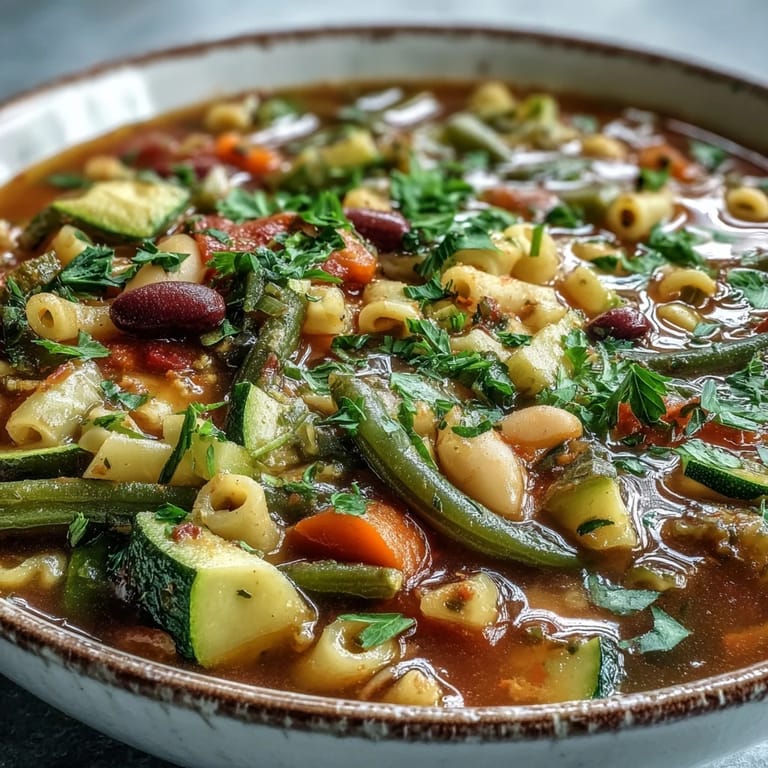
- Ladle into bowls and finish with a small handful of fresh parsley and Parmesan cheese if you're using it.
 Pin it
 One evening, I served this soup with crusty bread and a simple salad, and my teenage son, who usually eats like he's being timed, asked for the recipe to make it for his college apartment next year. In that moment I realized this wasn't just food, it was proof that the most meaningful meals are often the simplest ones.
On Vegetables and Improvisation
The truth about minestrone is that it was invented by cooks who needed to use what they had, so feel free to treat this as a template rather than a rigid instruction. Cabbage adds a slightly sweet earthiness, peas bring a pop of sweetness, chopped kale makes it more substantial, and diced bell peppers add brightness. I once added a cup of chopped fennel bulb because I had it and suddenly discovered a new favorite version. The soup doesn't care if you deviate, it only rewards you for thinking creatively about what's in your produce bin.
Flavor Building and Depth
This soup gains dimension from respecting the order of ingredients rather than throwing everything in at once. The initial sauté of onion, carrot, and celery develops sweet, caramelized notes that form the flavor foundation. Adding garlic only after those vegetables have softened prevents it from burning and turning bitter. The broth and tomatoes come in together to create an acidic counterpoint to the aromatics, and the pasta finishes the story by absorbing all those flavors while adding comfort and substance. It's a small lesson in how cooking is really just chemistry and patience working together.
Serving Suggestions and Storage
Serve minestrone with a hunk of crusty bread, a simple green salad, and whatever you have for wine, though Chianti is lovely if you're asking. This soup keeps beautifully for up to five days in the refrigerator and tastes progressively better as the flavors marry overnight, making it an ideal candidate for meal prep or feeding a crowd throughout the week. The pasta softens slightly with time, so if you're storing it, you might add a splash of broth when reheating to restore the right consistency.
- For a heartier version, add white beans in addition to the cannellini for double the protein and texture.
- Freeze this soup in individual portions for instant comfort food on nights when cooking feels impossible.
- A squeeze of fresh lemon juice added at the table brightens everything and makes people wonder what you did.
 Pin it
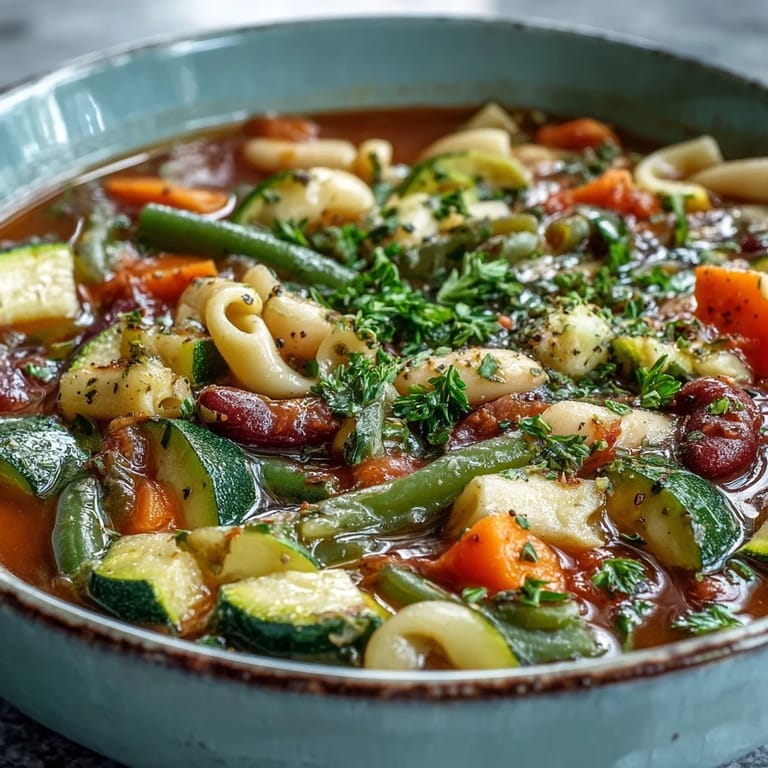
 Minestrone is the soup that reminds you why people gather around tables to eat, why a single pot of something warm and honest is sometimes all you need. Make it once and it becomes part of your personal cookbook, the kind of recipe you'll make again when someone you love needs feeding.
Frequently Asked Questions
- → Can I make minestrone soup ahead of time?
Yes, minestrone tastes even better the next day. Store it in the refrigerator for up to 4 days. Note that pasta will absorb liquid, so add extra broth when reheating.
- → What vegetables work best in minestrone?
Traditional choices include carrots, celery, zucchini, green beans, and tomatoes. Feel free to add seasonal vegetables like cabbage, peas, or bell peppers for variety.
- → How do I make this soup gluten-free?
Simply substitute regular pasta with your favorite gluten-free variety. Ditalini, elbow macaroni, or small shells work wonderfully in this soup.
- → Can I freeze minestrone soup?
Yes, but for best results, freeze it before adding the pasta. Cook pasta fresh when reheating. Frozen minestrone keeps well for up to 3 months.
- → What can I substitute for cannellini beans?
Great northern beans, kidney beans, or chickpeas work perfectly as alternatives. Each brings a slightly different texture and flavor to the soup.
- → How can I add more protein to this soup?
Add cooked Italian sausage, shredded chicken, or extra beans. For plant-based protein, increase the bean quantity or add white beans and lentils.