 Save
Save My neighbor Maria taught me that minestrone isn't about following rules—it's about whatever vegetables are sitting in your crisper drawer at that moment. One Saturday afternoon, she stood at her stove with me crowded beside it, tossing in handfuls of zucchini and green beans while humming an old Italian song, and I finally understood why this soup shows up at every family table in Tuscany. The magic isn't in precision; it's in the fact that it tastes like home no matter what you throw into the pot.
I made this soup on a gray November evening when my partner came home completely worn out from work, and by the time those first beans hit the bubbling broth, the whole kitchen smelled so inviting that they just sat at the counter and watched me cook without saying much. Halfway through the second bowl, they actually smiled—the real kind, not the polite kind—and that's when I realized minestrone does something almost magical for tired people.
Ingredients
- Olive oil: Use a decent one because you'll taste it in those early minutes when it carries the onion and garlic flavor into everything else.
- Onion, garlic, carrots, and celery: This is your flavor foundation, the holy trinity plus one—take a full 2 to 3 minutes with them so they release their sweetness into the oil.
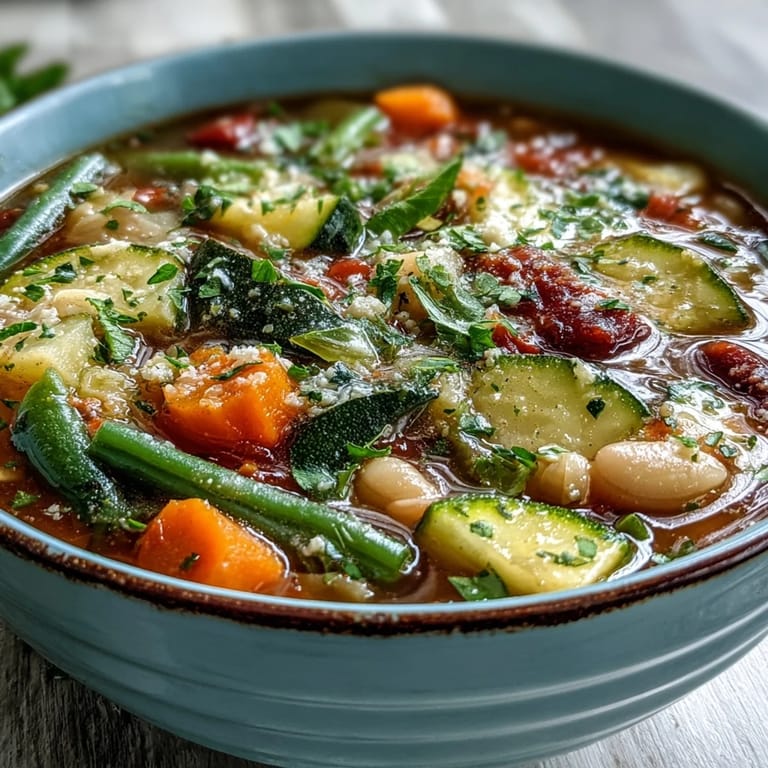
- Zucchini, potato, and green beans: These vegetables are your texture variety, each one cooking at its own pace so the soup never feels mushy or boring.
- Diced tomatoes with juices: The acidity balances everything and adds a subtle brightness that makes people ask what your secret ingredient is.
- Vegetable broth and water: The broth carries flavor while water keeps it from becoming too intense—use a ratio that feels right to your taste.
- Cannellini beans: They're creamy without being heavy, and they add the protein that makes a bowl feel like an actual meal rather than just vegetables.
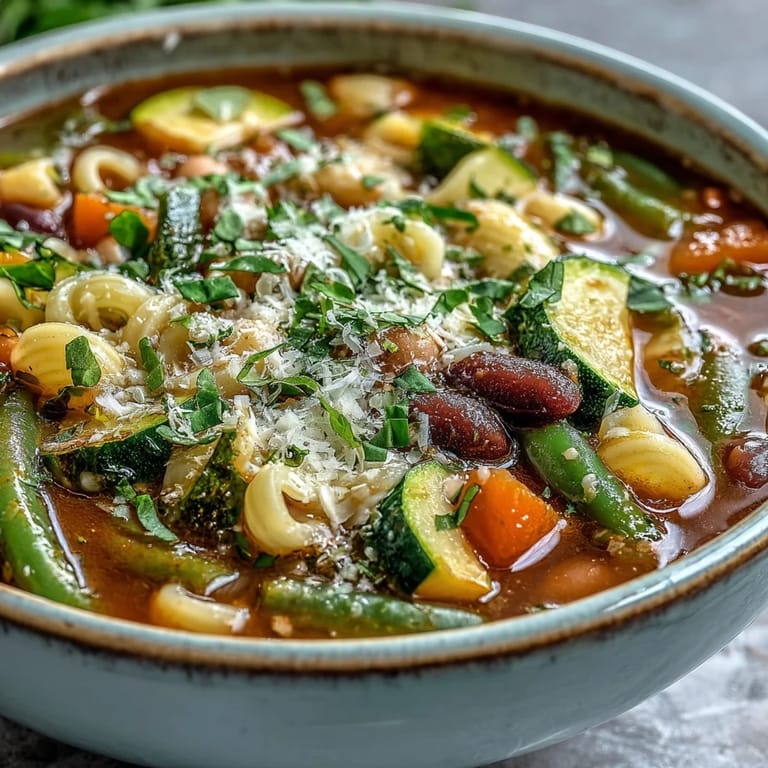
- Small pasta (ditalini or elbow): The shape matters more than people realize because tiny pasta distributes evenly throughout each spoonful instead of settling to the bottom.
- Dried oregano and basil: Don't skip these because they bloom beautifully in the hot broth and create that unmistakable Italian warmth.
- Bay leaf: It's subtle but essential—remove it before serving or you'll taste an unexpected bitterness.
- Fresh parsley and basil: These go in at the very end and add a brightness that transforms the soup from good to craveable.
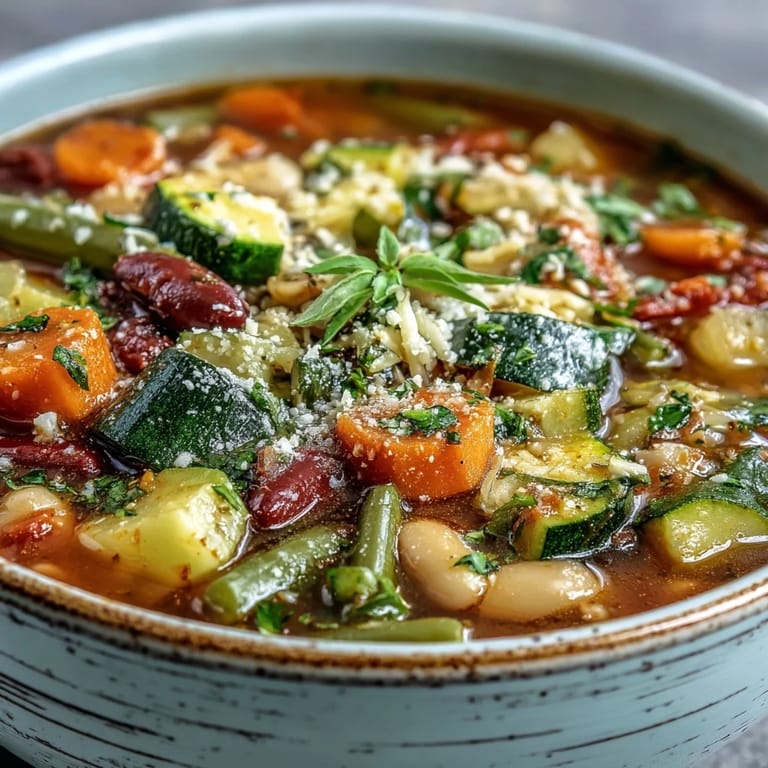
- Parmesan cheese: A generous handful sprinkled on top gives you that salty richness that makes you want another bowl.
Tired of Takeout? 🥡
Get 10 meals you can make faster than delivery arrives. Seriously.
One email. No spam. Unsubscribe anytime.
Instructions
- Build your flavor base:
- Warm the olive oil over medium heat and listen for it to shimmer slightly, then add your onion and garlic. Let them soften for 2 to 3 minutes until the raw onion smell transforms into something sweet and almost caramel-like—your nose will tell you when it's ready.
- Add your vegetables:
- Toss in the carrots, celery, zucchini, potato, and green beans, and let them cook for 5 to 6 minutes, stirring occasionally. You want them to soften at the edges but still hold their shape—they'll continue cooking in the broth.
- Pour in the liquid and seasonings:
- Add the tomatoes with their juices, the vegetable broth, water, and all your dried herbs and bay leaf. Bring everything to a boil—you'll see it rise and foam slightly—then reduce the heat and let it settle into a gentle simmer.
- First simmer:
- Cover the pot and let it bubble away quietly for 15 minutes. This is when the vegetables become tender and all those flavors start talking to each other, so resist the urge to peek too often.
- Add beans and pasta:
- Stir in the drained cannellini beans and small pasta, then let it simmer uncovered for 10 to 12 minutes. Watch it this time because pasta can tip from tender to mushy in about 30 seconds.
- Finish with fresh herbs:
- Fish out the bay leaf, then stir in your fresh parsley and basil. Taste it and adjust the salt and pepper—this is your moment to make it exactly right.
- Serve with intention:
- Ladle into bowls and top with a handful of Parmesan cheese if you like. Serve immediately while it's hot and the fresh basil smell is still rising from the surface.
 Pin it
 There's a moment in every pot of minestrone where the kitchen fills with this unmistakable aroma—earthy and bright and comforting all at once—and that's when you know the soup has become more than just lunch. It's the smell of someone caring about you, whether that someone is you or your grandmother or a neighbor sharing their secrets.
Vegetables You Can Swap Without Guilt
The beauty of minestrone is that it was born from leftovers, so treating it like a choose-your-own-adventure dish is actually the most authentic thing you can do. If your crisper drawer is full of spinach instead of green beans, or kale instead of zucchini, or even cabbage instead of celery, the soup will still taste like itself because the foundation—the tomatoes, the beans, the herbs—stays constant. I once made it with butternut squash because that's what I had, and it became this creamy, almost autumnal version that my partner still requests in October.
Making It Heartier (Or Richer)
Some people like their minestrone almost stew-like, and some like it brothier, so here's what I've learned through trial and error. If you want something more substantial, add extra beans or even a handful of lentils when you add the pasta—they won't change the flavor but they'll make it feel more like dinner than a side. And if you're not vegetarian, pancetta crisped up with the onions adds a smokiness that makes people pause mid-spoonful and wonder what just happened to their taste buds.
The Small Moments That Matter Most
Minestrone taught me that cooking doesn't have to be complicated to be meaningful, and that sometimes the best meals are the ones you make when you're not trying too hard. The soup never asks for your finest ingredients or your most technical skills—it just asks that you show up and pay attention for an hour. Here's what actually makes the difference between okay minestrone and the kind people remember:
- Use good olive oil in the beginning because those first few minutes of flavor-building set the tone for everything that follows.
- Don't rush the onion and garlic stage no matter how eager you are to throw in vegetables—those few minutes of caramelization unlock the entire soul of the dish.
- Taste constantly as you go so you can adjust the salt and herbs to your preference rather than waiting until the very end to discover it needs help.
 Pin it
 This soup has become my answer to almost every question in the kitchen—what should I make when I'm tired, when I have random vegetables, when someone I love needs comfort without fanfare. It shows up and does its job quietly, which might be the best thing a recipe can do.
Frequently Asked Questions
- → What vegetables work best in minestrone?
Traditional minestrone includes carrots, celery, zucchini, potatoes, and green beans, but the beauty lies in versatility. Swap in seasonal favorites like spinach, kale, cabbage, or butternut squash based on what's fresh and available.
- → Can I make minestrone gluten-free?
Absolutely. Simply substitute gluten-free pasta for traditional wheat varieties. Verify your vegetable broth and all canned ingredients are certified gluten-free if avoiding gluten for medical reasons.
- → How should I store leftover minestrone?
Cool completely and refrigerate in airtight containers for up to 4 days. The pasta will absorb broth as it sits—add a splash of water or broth when reheating. For longer storage, freeze without the pasta and add fresh when serving.
- → What pasta shape is traditionally used?
Ditalini, small shells, or elbow macaroni are classic choices. Their small shape cooks evenly and fits perfectly on a spoon. Any small pasta works beautifully, so use what you have in your pantry.
- → Is minestrone better the next day?
Like many soups, minestrone develops deeper flavors after resting overnight. The ingredients meld together, creating a richer, more harmonious taste. Make a large batch and enjoy throughout the week.
- → Can I add meat to minestrone?
While traditional minestrone is vegetarian, adding pancetta or diced bacon with the onions creates a savory depth. Browned Italian sausage or leftover shredded chicken also work well for a heartier variation.