 Save
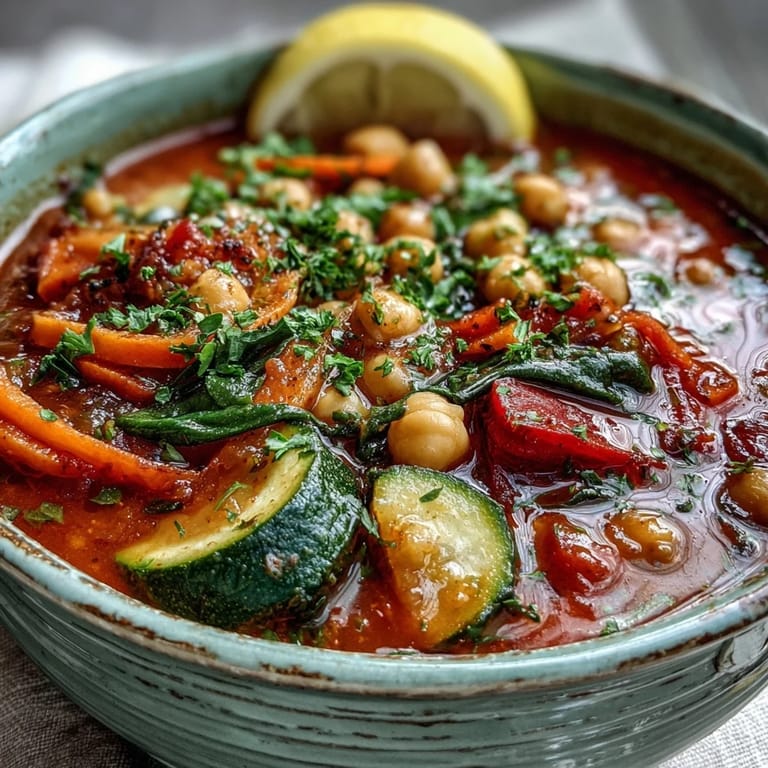
Save There's something wonderfully grounding about making a pot of chickpea stew on a quiet afternoon, the kind of cooking that doesn't demand your full attention but rewards it anyway. I discovered this particular version while trying to use up a handful of vegetables that were reaching their prime in my crisper drawer, and somehow it became the thing I crave when I need to feel genuinely nourished. The spices bloom in the hot oil with this almost meditative quality, filling your kitchen with warmth before you've even added a single vegetable. It's the sort of dish that tastes better the next day, if you can resist eating it all immediately.
I made this for a friend who'd just gone vegan, and I was nervous the whole time, worried I'd somehow miss the mark with plant-based cooking. But when she took that first spoonful and closed her eyes, I realized I was overthinking it, that good food is just good food regardless of where the protein comes from. She asked for the recipe before she'd even finished her bowl, and now I joke that I accidentally converted her to my style of cooking.
Ingredients
- Cooked chickpeas: These little legumes are your protein backbone, and they absorb all the spiced broth beautifully, becoming creamy without any cream involved.
- Onion, garlic, carrots, and celery: This holy trinity (plus carrot) builds your flavor foundation, and there's no shortcut that tastes as good as taking the time to sauté them properly.
- Red bell pepper: Adds sweetness and brightness that balances the earthiness of the spices, plus gorgeous color that makes you want to eat it.
- Zucchini: Goes in near the end so it stays tender rather than becoming mushy, a small timing detail that makes a real difference.
- Fresh spinach: Wilts down to almost nothing but contributes minerals and a subtle earthiness that feels nourishing.
- Canned diced tomatoes: Use the good stuff if you can, as it becomes the backbone of your sauce and tastes noticeably better than the cheap brands.
- Vegetable broth: Low-sodium is key here so you can control the salt and taste how the spices actually perform.
- Olive oil: Use something you'd actually drizzle on bread, not the bottom-shelf stuff, because you'll taste the difference in every spoonful.
- Spice blend: Cumin, smoked paprika, turmeric, and coriander create a warm, slightly smoky depth that makes people ask what you put in there, and the answer is always simpler than they expect.
- Bay leaf: A small gesture toward flavor that you'll fish out at the end, an old-school technique that actually works.
Tired of Takeout? 🥡
Get 10 meals you can make faster than delivery arrives. Seriously.
One email. No spam. Unsubscribe anytime.
Instructions
- Start your aromatics:
- Heat the olive oil in your pot over medium heat and add the diced onion, letting it soften for about three minutes until it's translucent and sweet-smelling. This isn't a step to rush, as those three minutes genuinely matter.
- Build your flavor base:
- Add the garlic, carrots, celery, and red bell pepper, stirring occasionally for five minutes until everything has a chance to release its aromas and start breaking down slightly. You're looking for the kitchen to smell undeniably savory and inviting.
- Toast your spices:
- Sprinkle in the cumin, smoked paprika, turmeric, coriander, black pepper, salt, and bay leaf, stirring constantly for just one minute until the spices coat everything and their essential oils start to bloom. This is the moment where your stew transforms from random vegetables to something intentional.
- Bring it together:
- Add your chickpeas, diced tomatoes (juice and all), and vegetable broth, then let everything come to a boil before immediately dropping the heat to low. Watch for the moment when it transitions from a gentle simmer to active bubbling, then adjust your burner accordingly.
- Let it simmer:
- Leave the pot mostly alone for twenty minutes, just stirring occasionally to prevent anything from sticking to the bottom, allowing all those flavors to meld and deepen. This is when you can actually relax and do something else.
- Add the zucchini:
- After the twenty minutes, add your diced zucchini and cook for another seven minutes, watching how it softens but doesn't completely dissolve. The timing keeps it tender but still present.
- Finish with greens:
- Stir in the fresh spinach and cook just until wilted, about two minutes, then fish out the bay leaf before tasting and adjusting your seasoning. This final step adds nutrition and a subtle green note.
- Serve and enjoy:
- Ladle into bowls and top with fresh parsley and a squeeze of lemon juice if you have it, letting people customize their own bowls.
 Pin it
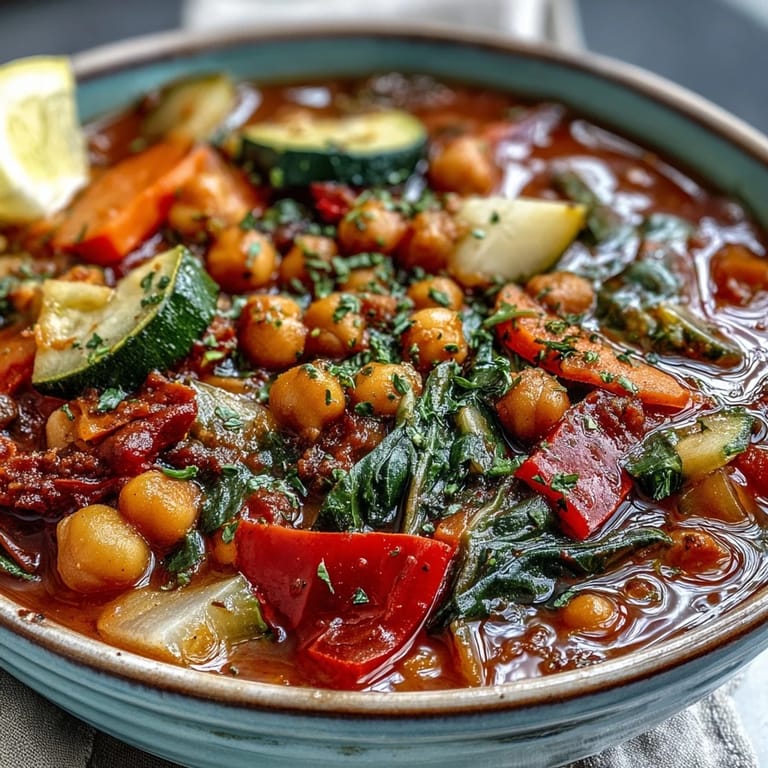
 My neighbor smelled it cooking and appeared at my door with a container of homemade hot sauce she'd made, and we ended up eating lunch together right there on my kitchen counter, our bowls getting cold while we talked about our gardens and terrible cooking failures. That's when I knew this stew had crossed from recipe to ritual, from something I made to something that brought people together.
When to Make This
This stew works perfectly for meal prep because it actually tastes better after spending a night in the refrigerator, all the flavors becoming rounder and more integrated. I make it on Sunday evenings and eat from it all week, and it reheats beautifully either on the stovetop with a splash of extra broth or in the microwave without any fussing. It's also surprisingly elegant enough to serve guests if you're looking for something impressive that doesn't announce how little effort it took.
Making It Your Own
The beauty of this stew is how accommodating it is to what you have on hand or what you're craving that day. I've swapped the red bell pepper for green, used kale instead of spinach, added a can of white beans alongside the chickpeas for extra heartiness, and once threw in a handful of dried apricots because I was feeling adventurous. The base is solid enough that you can play around and still end up with something delicious.
Serving and Storage
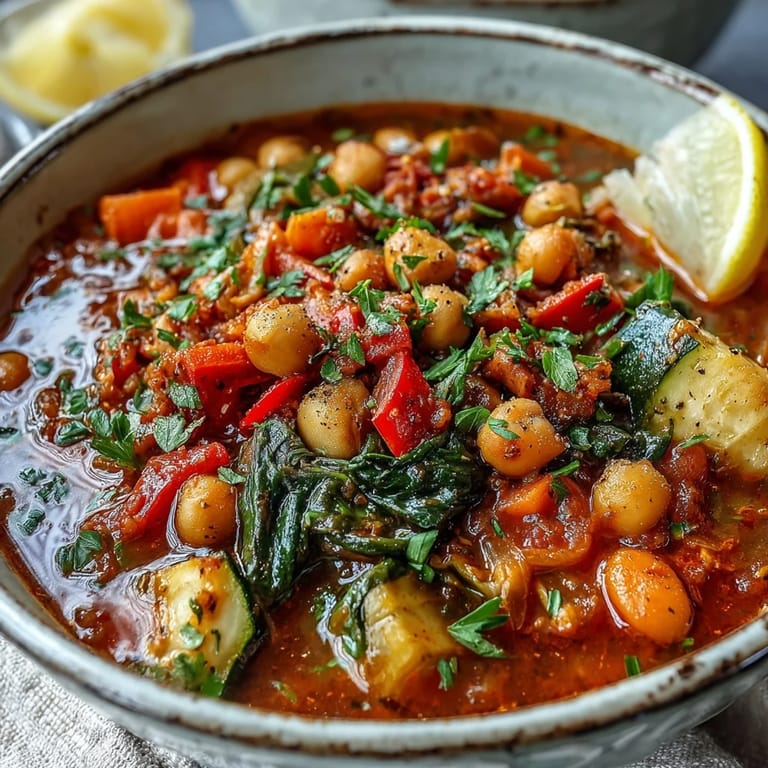
Serve this hot in deep bowls, and if you want to make it feel restaurant-quality, a good finishing touch is a drizzle of excellent olive oil and a flourish of fresh parsley right before eating. It keeps in the refrigerator for five days in an airtight container, and it also freezes beautifully for up to three months if you want to make double and save half for emergencies. Just remember to leave a little headroom in your container if you're freezing it, as the liquid will expand slightly.
- Add a squeeze of fresh lemon juice before eating to brighten all those warm spices and add a note of acidity.
- Serve alongside crusty bread or brown rice if you want to turn it into something more substantial for hungry people.
- A simple green salad on the side adds freshness and cuts through the richness of the oil and spices beautifully.
 Pin it
 This stew has become my go-to when I want to cook something nourishing without any fuss, a reliable friend in the kitchen that never disappoints. I hope it becomes something you turn to again and again, each time noticing something new about how the spices work or how the vegetables transform in the heat.
Frequently Asked Questions
- → Can I use dried chickpeas instead of canned?
Yes, you can use dried chickpeas. Soak 1 cup of dried chickpeas overnight, then cook them until tender before adding to the stew. This typically takes 1-2 hours of simmering.
- → How do I store leftover chickpea stew?
Store cooled stew in an airtight container in the refrigerator for up to 4 days. You can also freeze it for up to 3 months. Reheat gently on the stovetop, adding a splash of broth if needed.
- → What can I serve with this stew?
This stew pairs beautifully with crusty whole grain bread, brown rice, quinoa, or couscous. For added protein, serve alongside a dollop of hummus or tahini sauce.
- → Can I add other vegetables to this stew?
Absolutely! Sweet potatoes, butternut squash, green beans, or kale work wonderfully. Add heartier vegetables earlier in the cooking process and delicate greens at the end.
- → How can I make this stew spicier?
Add red pepper flakes, fresh chopped jalapeños, or a dash of cayenne pepper when sautéing the spices. You can also drizzle with hot sauce before serving.
- → Is this stew suitable for meal prep?
Yes, this stew is excellent for meal prep. The flavors actually improve after a day or two. Portion into individual containers for easy grab-and-go lunches throughout the week.