 Save
Save Last winter, a friend mentioned how her skin looked radiant after weeks of sipping bone broth daily, and I was skeptical until I tried it myself. The first bowl I made was almost by accident—I had leftover broth in the fridge and started throwing in whatever vegetables looked fresh, then added turmeric because I'd read it was anti-inflammatory. That golden, steaming cup became my ritual on cold mornings, and somehow the joint pain I'd complained about for months just... quieted down. Now I make this broth bowl intentionally, knowing exactly why each ingredient matters.
I made this for my mother after her surgery, and watching her ask for a second bowl told me everything about whether a recipe truly nourishes. She said it tasted like care, which sounds cheesy until you realize that's exactly what slow simmering does—it transforms simple ingredients into something that feels like an embrace.
Ingredients
- Bone broth (1.5 liters): The foundation—homemade is superior because you control the simmer time and know what went in, but a quality store-bought version works if you're short on time; check labels for minimal additives and ideally gelatin-rich appearance when cooled.
- Yellow onion (1 medium, quartered): Adds subtle sweetness and depth without overwhelming; quartering keeps pieces large enough they won't dissolve during the long simmer.
- Garlic (4 cloves, smashed): Smashing releases oils and flavor compounds more effectively than mincing, giving the broth an almost savory sweetness.
- Fresh ginger (thumb-sized piece, sliced): The warming spice that makes you feel the broth working; slicing rather than grating keeps it easy to strain out later.
- Fresh turmeric (thumb-sized, sliced) or ground (1 tsp): Fresh turmeric is milder and earthier than ground, so use more if you prefer; this is where the anti-inflammatory magic lives.
- Apple cider vinegar (2 tbsp): A secret ingredient that helps extract minerals from bones and vegetables; the acidity is barely detectable in the final broth but makes everything taste brighter.
- Black peppercorns (1 tsp whole): Whole peppercorns stay in the broth during straining and release their flavor gradually without becoming bitter.
- Sea salt (1 tsp, to taste): Start with this amount and adjust after straining; taste buds vary and salt levels matter for mineral absorption.
- Carrots (2 medium, sliced): Added mid-simmer so they stay firm enough to enjoy eating, not mushy.
- Celery (2 stalks, sliced): Brings subtle umami and pairs naturally with bone broth; slice on a bias if you want it to cook faster.
- Broccoli florets (1 cup): Added early enough to soften but not so long it becomes sulfurous and gray-looking.
- Zucchini (1, sliced): Cooked last so it stays almost raw and keeps its delicate texture; a practical vegetable that absorbs broth flavor without falling apart.
- Baby spinach (1 cup): Wilts in seconds at the very end, adding iron and brightness without cooking down to nothing.
- Fresh parsley or cilantro (2 tbsp, chopped): Cilantro adds a bright, almost citrusy note if you don't have the genetic soapy-taste gene; parsley is safer and adds fresh herbaceousness.
- Sesame seeds (1 tbsp, optional): Toasted sesame adds a final layer of nuttiness and a satisfying texture contrast.
- Lemon wedges (for serving): A squeeze at the end cuts through richness and increases mineral absorption from the broth.
Tired of Takeout? 🥡
Get 10 meals you can make faster than delivery arrives. Seriously.
One email. No spam. Unsubscribe anytime.
Instructions
- Build your flavor base:
- Pour bone broth into a large stockpot and add the onion, garlic, ginger, turmeric, apple cider vinegar, peppercorns, and salt. Bring to a gentle boil over medium-high heat—you'll see small bubbles breaking the surface and smell the turmeric and ginger warming up; this is when you know the aromatics are beginning to release their compounds.
- Simmer low and slow:
- Reduce heat to low, cover the pot, and let it simmer for 1.5 hours untouched. The broth will deepen in color and develop a complex, warming flavor as collagen breaks down and spices infuse; resist peeking too often because you want to maintain steady, gentle heat.
- Strain for clarity:
- Pour the broth through a fine mesh sieve into another pot, pressing gently on solids to extract every drop of flavor without forcing through fibrous material. You should end up with a clear, golden liquid that tastes concentrated and rich.
- Add heartier vegetables:
- Return the strained broth to the pot and bring back to a gentle simmer, then add carrots, celery, and broccoli. Simmer for 10 minutes until the vegetables are tender enough to eat but still hold their shape and color.
- Finish with delicate greens:
- Add zucchini slices and spinach, simmering just 2–3 more minutes until the spinach wilts but remains bright green and the zucchini is fork-tender. Taste the broth at this point and add more salt if it needs it.
- Serve with intention:
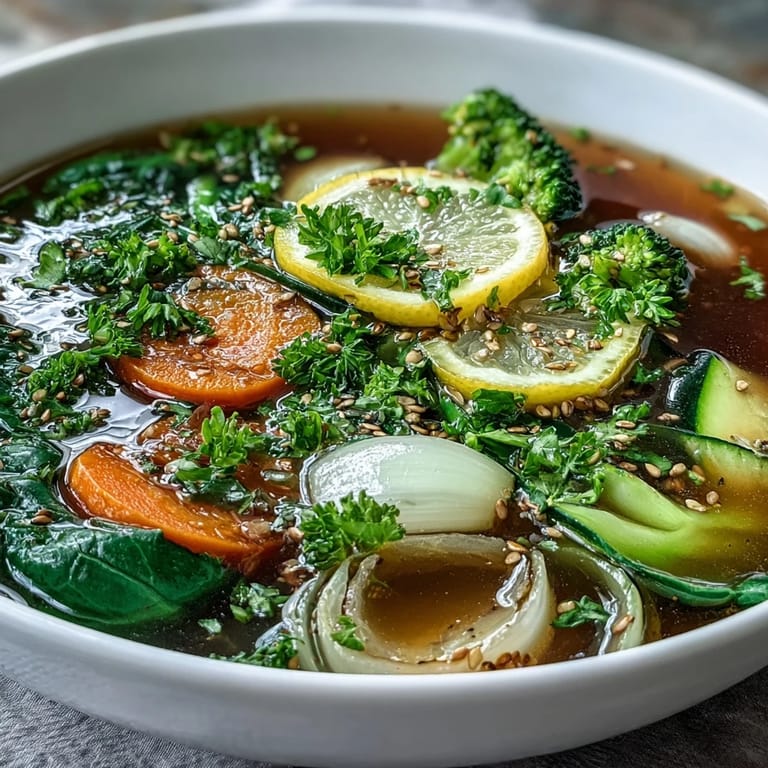
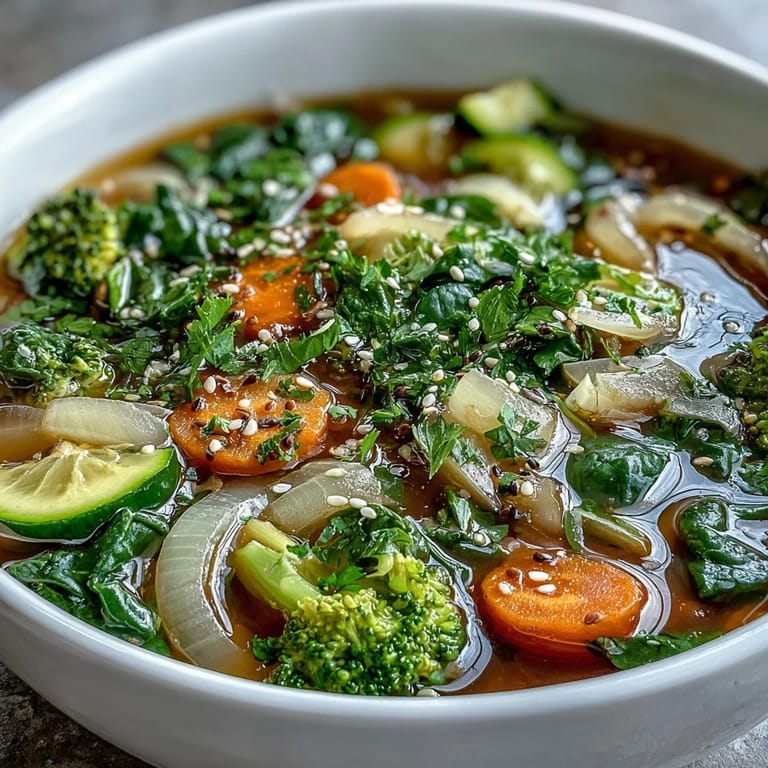
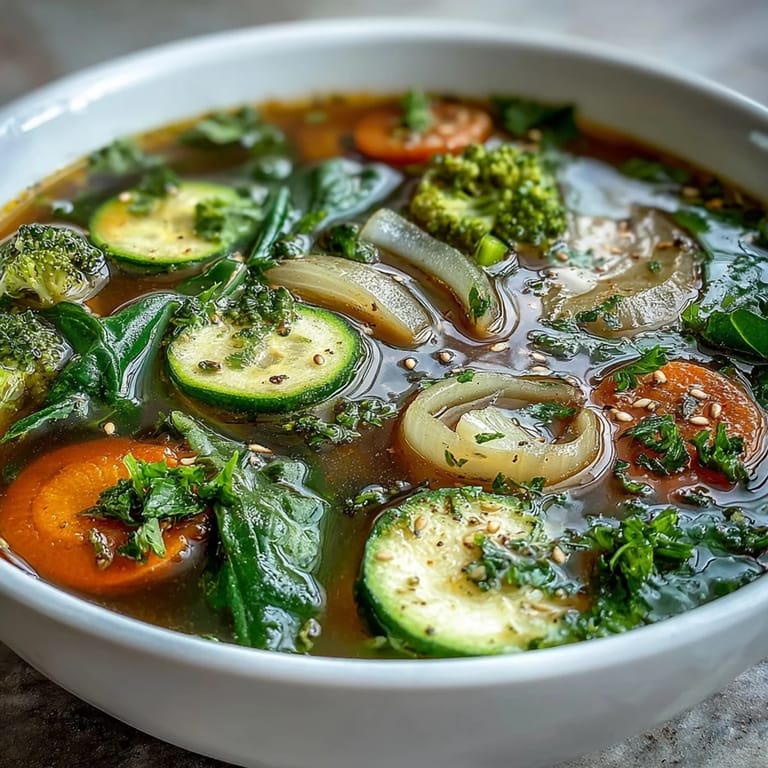
- Ladle broth and vegetables into bowls, letting the vegetables settle to the bottom and the golden liquid fill to just below the rim. Finish with fresh herbs, a scatter of sesame seeds, and a wedge of lemon to squeeze over before eating.
 Pin it
 One afternoon, my partner tried this broth bowl while stressed about work and came back thirty minutes later looking noticeably calmer, asking if there was something healing in the recipe or if I'd just accidentally made the perfect comfort food. I think it's both—the warmth, the ritual, and the fact that collagen and ginger genuinely reduce inflammation means your body is actually thanking you while you're sitting there with a spoon.
Why Fresh Turmeric Matters
Ground turmeric is convenient and works, but fresh turmeric root tastes completely different—earthier, slightly sweet, almost floral in a way ground can't replicate. The first time I used fresh instead of ground, I realized the broth tasted less medicinal and more like something you'd actually want to drink daily. Fresh turmeric also tends to have higher curcumin content, so you're getting more of the anti-inflammatory benefit that made you reach for this recipe in the first place.
Vegetable Substitutions That Actually Work
Seasonal vegetables make this recipe feel alive year-round instead of the same bowl every time. In summer, swap the carrots and celery for mushrooms, snap peas, or thinly sliced green beans; in fall, add roasted squash cubes or kale instead of spinach. The only rule is to add them in order of cooking time—longer cooking first, delicate last—so nothing becomes mushy.
Customizing for Your Body's Needs
This bowl becomes even more powerful when you layer in other ingredients based on what your body is asking for. Feeling sluggish and needing protein? Add poached chicken or tofu cubes before serving. Joints particularly achy? Double the fresh turmeric and ginger. Looking for more sustained energy? A soft-boiled egg on top turns this into a complete meal rather than a side dish.
- For a vegetarian version, use mushroom broth or vegetable stock instead of bone broth and the results will be lighter but still deeply flavorful.
- If you're making this for someone recovering from illness, slightly increase the salt content since the body needs electrolytes during healing periods.
- Leftover broth keeps for up to five days refrigerated and reheats beautifully, so making a double batch means nourishing breakfasts for half the week.
 Pin it
 This broth bowl became my answer to the question of how to eat well on days when cooking feels overwhelming—it's simple enough that tired evenings work, but nourishing enough that you feel genuinely better afterward. Once you taste how good it feels in your body, you'll find yourself reaching for it automatically.
Frequently Asked Questions
- → What makes this broth bowl collagen-boosting?
The collagen-boosting properties come primarily from the bone broth, which is naturally rich in collagen, amino acids, and gelatin. Slow-simmering the broth with apple cider vinegar helps extract these beneficial compounds from the bones, making them more bioavailable for your body to absorb.
- → Can I make this vegetarian?
Yes, simply substitute the bone broth with high-quality mushroom broth or vegetable broth. Mushroom broth particularly works well because it provides a rich, umami flavor profile that complements the turmeric and ginger beautifully.
- → How long will leftovers keep in the refrigerator?
Stored in an airtight container, leftovers will keep for 4-5 days in the refrigerator. The flavors often develop and improve after a day or two. Reheat gently on the stove, adding a splash of water or additional broth if needed.
- → Can I freeze this broth bowl?
Absolutely. Freeze the broth and vegetables together in freezer-safe containers for up to 3 months. For best results, slightly undercook the vegetables before freezing since they will continue cooking when reheated.
- → What vegetables work best in this broth bowl?
The recipe highlights carrots, celery, broccoli, zucchini, and spinach, but you can easily substitute based on season or preference. Kale, bok choy, mushrooms, or diced sweet potatoes all work beautifully. Aim for about 3-4 cups of vegetables total.
- → Why add apple cider vinegar to the broth?
Apple cider vinegar helps extract minerals and collagen from the bones during simmering. The acidity breaks down connective tissues, releasing more nutrients into the broth. You won't taste the vinegar in the final result.